Are you not making a profit with your piggery? Pig feeding profitability usually comes down to one overlooked detail: how you feed, not just what you feed. Are you not making a profit with your piggery? This is probably why:
Every day you eat a certain amount of food. But if you have not been gaining weight, then that amount of food is your maintenance food level.
But if you add a big scoop of rice to that every day, you will start to gain weight… This is food used for GROWTH.
Book an online consultation with one of our specialists pig farmer and nutritionist: Training4Farmers Consult
Learn how to feed your pigs for ultimate results: Pig Farming Course
Look at our Lease Cost Feed Ration Balancing Calculator that will help you design your own optimal rations: Lease Cost Feed Ration Balancing Calculator
If you are feeding your pigs (any animal for that matter) at less than Ad Lib level (as much as they will eat if the feed was available all the time)
- they will grow slower than when fed more.
- it will take more days to get them to slaughter weight..
- FOR EVERY DAY YOU GET THEM TO SLAUGHTER WEIGHT FASTER > YOU SAVE THE MAINTENANCE PORTION OF THEIR DAILY ALLOWANCE. (the growth portion was fed earlier to gain weight faster)
Maintenance Feed with Growth Feed

Maintenance Feed plus Ad-Lib Feed
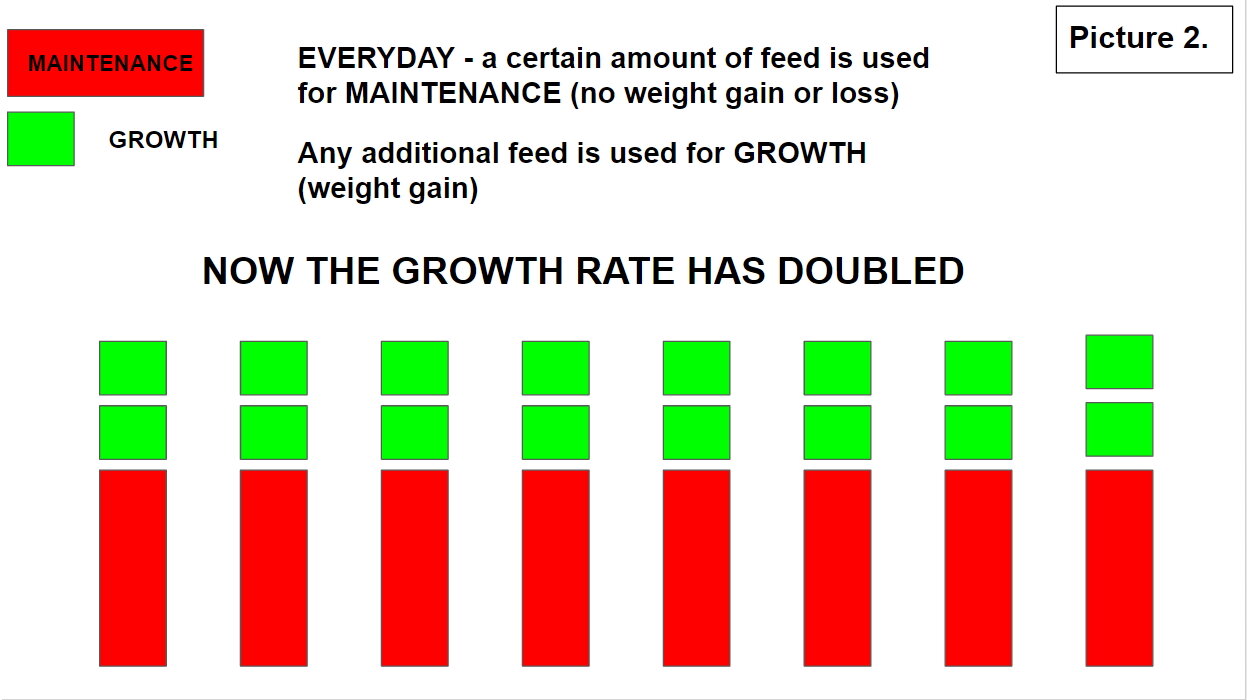
Feed Saved to slaughter weight

In other words, about 30% of every day’s feed (when fed Ad Lib) goes to maintenance — you get nothing sellable from it. As a result, every day it takes to reach slaughter weight costs you 30% of that day’s feed. So, feeding them 69 extra days (100 minus 31) means losing 30% of the feed for those 69 extra days.
19kg less feed from 26 to 50kg live weight – Imagine how much less from 10 to 70 or 90kg !
AND 3x FASTER…

That’s the whole story behind pig feeding profitability — it’s not really about spending less on feed, it’s about wasting less of it keeping an animal alive instead of growing it. Every day you shave off time to slaughter weight is a day you dodge that 30% maintenance tax. Multiply that across a full batch, and Ad Lib feeding stops looking like an extra cost and starts looking like the cheapest thing you can do.
Reference: Feeding Strategies